
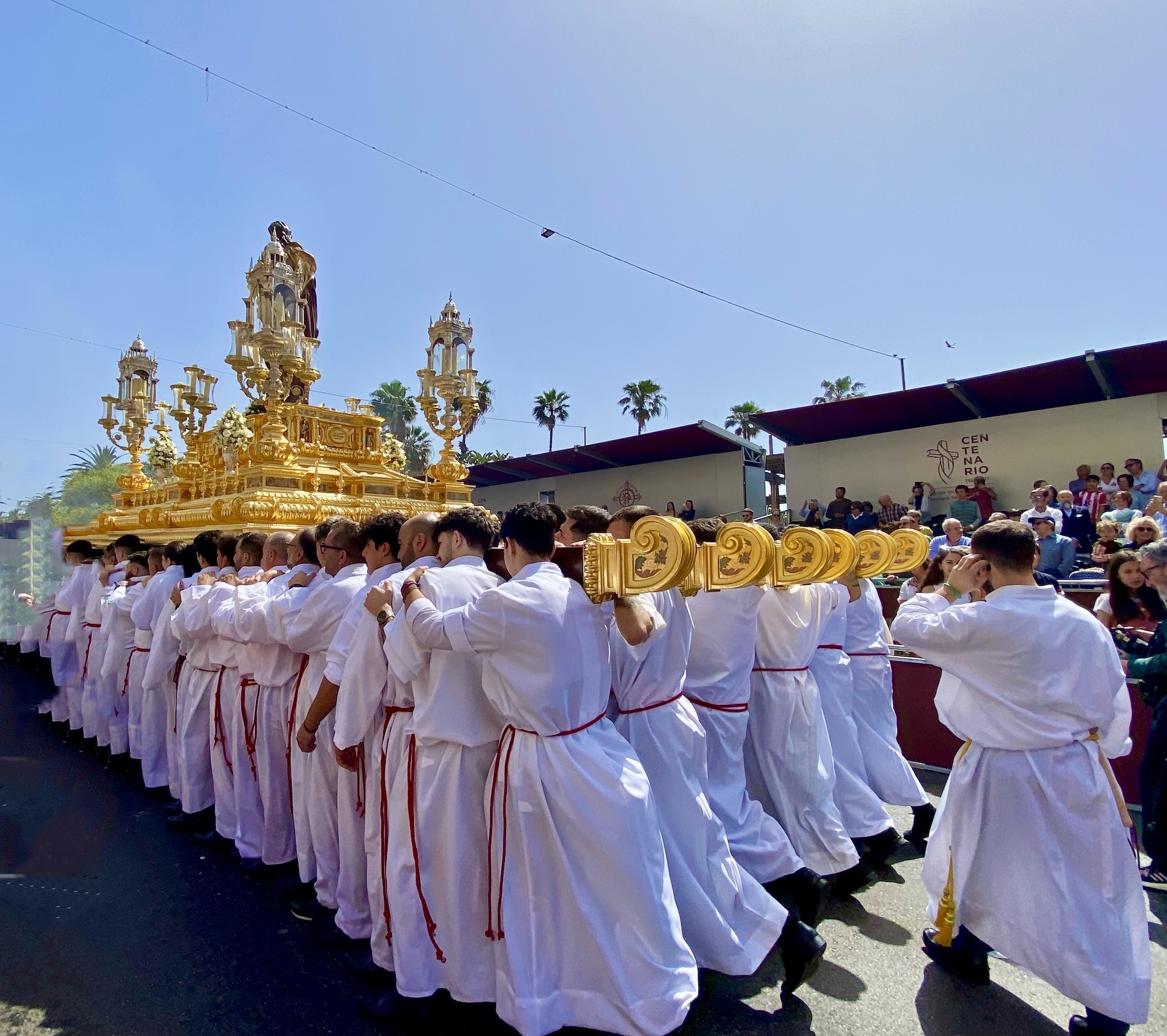
Semana Santa in Málaga: Processions, Traditions and Tips for Holy Week. This is one of the most impressive times of the year to visit the city. During Holy Week, the week leading up to Easter, spectacular processions with richly decorated thrones make their way through the historic centre day and night. Music, incense, candles, thousands of spectators and centuries-old traditions create an atmosphere you really have to experience for yourself.
And you certainly don’t have to be religious to appreciate it. In Andalusia, Semana Santa is much more than a religious celebration. It is about culture, tradition and emotion – and in Málaga, they do it on a grand scale. Are you spending your holiday in the province of Málaga during Semana Santa? We would definitely recommend experiencing at least one procession.
What is Semana Santa?
Semana Santa literally means Holy Week and takes place during the week leading up to Easter. It commemorates the suffering, death and resurrection of Jesus Christ. In Andalusia, this is done in a way you are unlikely to forget. Religious brotherhoods, known as cofradías or hermandades, carry enormous thrones through the streets. These tronos feature statues of Christ or the Virgin Mary, often surrounded by flowers and dozens of candles. Semana Santa is celebrated in towns and cities throughout Spain, but Semana Santa in Málaga is one of the best-known Holy Week celebrations in Andalusia.
How is Semana Santa celebrated in Málaga?
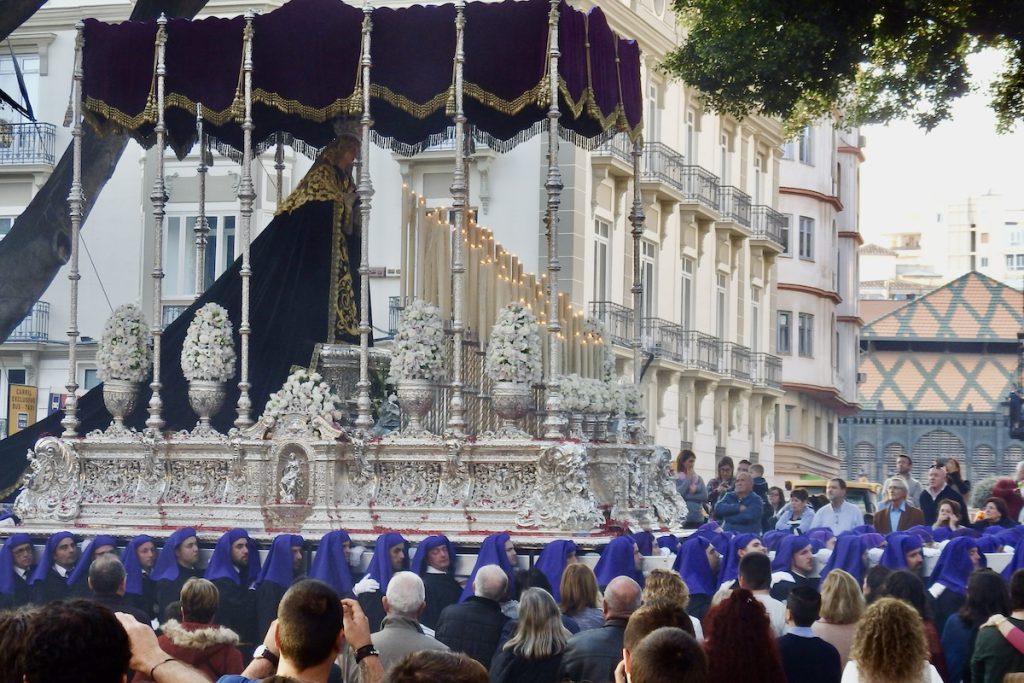
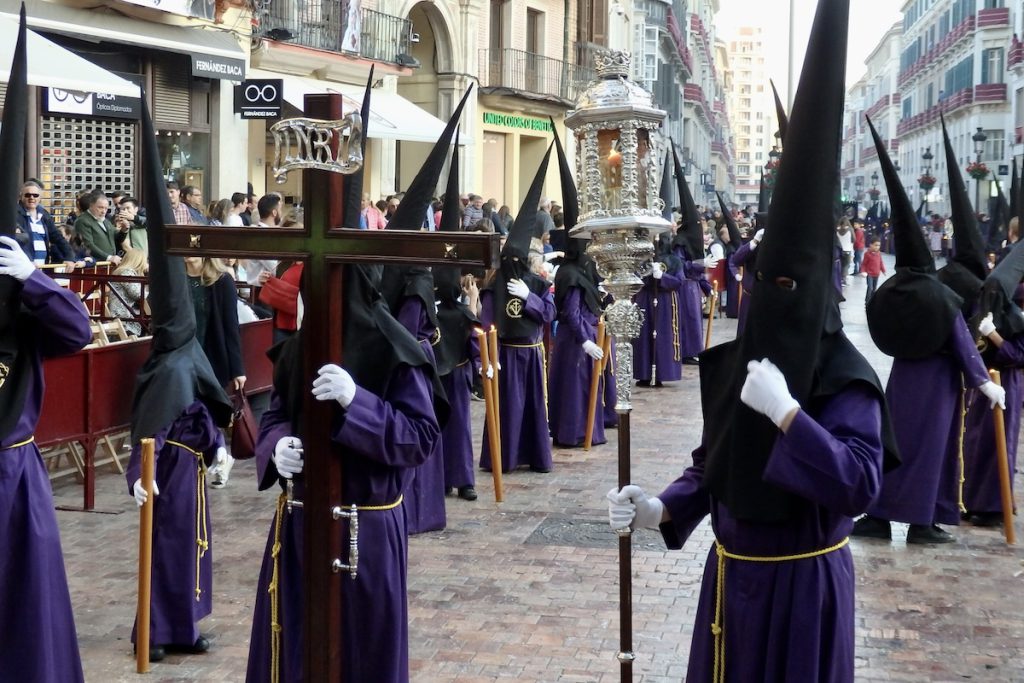
From Palm Sunday (Domingo de Ramos) until Easter Sunday (Domingo de Resurrección), Málaga is almost completely taken over by Semana Santa. Dozens of brotherhoods carry their thrones through the city. Some of these tronos are enormous and are carried on the shoulders of large groups of men and women known as hombres de trono. Manoeuvring such a huge throne through Málaga’s sometimes narrow streets is quite an art. It is no surprise that you can see the brotherhoods practising in the weeks before Semana Santa. Long lines of nazarenos walk in front of and behind the thrones.
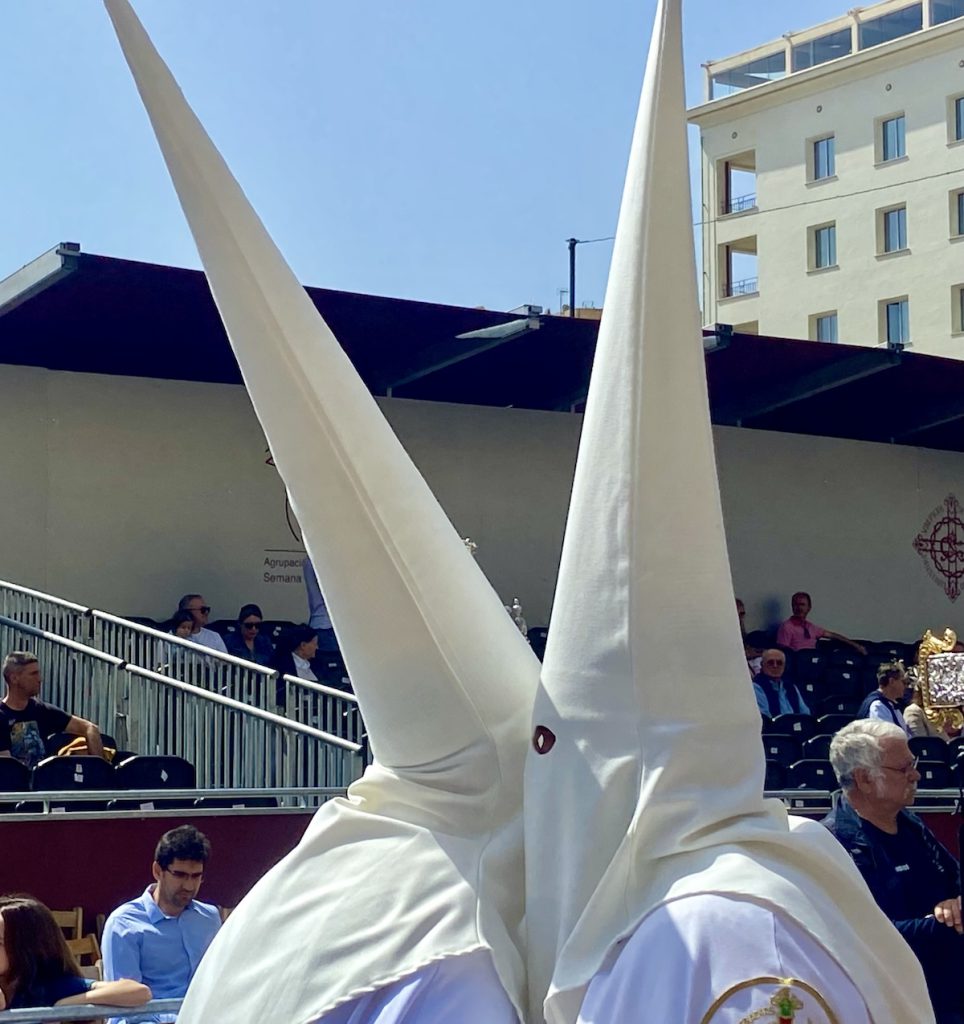
These penitents wear traditional robes with tall pointed hoods. Some carry candles, crosses or other religious symbols. Along the route, you will hear marching bands, drums and trumpets. And then, suddenly, everything can fall completely silent as a saeta is sung from a balcony – an emotional religious song traditionally performed without musical accompaniment. It is precisely this contrast between exuberant celebration and complete silence that makes Semana Santa in Málaga so special.
Why is Semana Santa in Málaga so special?
Every Andalusian city celebrates Semana Santa in its own way. Málaga is particularly famous for its enormous thrones and the lively atmosphere surrounding the processions. This isn’t an event put on just for tourists. For many malagueños, Semana Santa is an important part of their family history and identity. Some families have been associated with the same brotherhood for generations. So you are not simply watching a parade. You are getting a glimpse into a tradition that is deeply rooted in life in Málaga. And some of those traditions are rather unusual.
El Rico: why is a prisoner released during Semana Santa in Málaga?
One of the most remarkable traditions of Semana Santa in Málaga is the annual pardoning of a prisoner by the brotherhood of Jesús El Rico. According to tradition, the custom dates back to an epidemic in the 18th century. When a procession was unable to take place, prisoners are said to have left the prison to carry the statue of Jesús El Rico through Málaga themselves. Afterwards, they voluntarily returned to their cells. This eventually led to the tradition of granting a pardon to a prisoner each year.
The ceremony takes place on Miércoles Santo, Holy Wednesday, during the procession of Jesús El Rico. It is a tradition you will find in very few other places, which alone makes Wednesday an interesting evening to experience Semana Santa in Málaga.
Which Semana Santa processions in Málaga should you not miss?
Of course, you could travel to Málaga every day during Holy Week and watch procession after procession. But for most holidaymakers, that might be a little too much of a good thing. If you only want to choose one or two days, these are some of the most interesting moments to experience.
Monday: Los Gitanos
On Monday, the brotherhood of Los Gitanos makes its way through Málaga. This procession is known for its lively and emotional atmosphere. There is singing and cheering around the religious images, creating an atmosphere that can feel quite different from some of the more solemn processions. If you want to experience a Semana Santa procession where you can really feel the emotion of the crowd, Monday is a great day to visit Málaga.
Wednesday: Jesús El Rico and the pardoning of a prisoner
On Miércoles Santo, Jesús El Rico makes its way through the city. This is the day when the remarkable tradition of pardoning a prisoner takes place, making it without doubt one of Málaga’s most unusual Semana Santa processions.
Maundy Thursday: Cristo de Mena and La Legión
Jueves Santo – Maundy Thursday – is one of the best-known days of Semana Santa in Málaga. One of the biggest attractions is Cristo de la Buena Muerte, associated with the Congregación de Mena and the Spanish Legion, La Legión. The legionnaires march through Málaga at a brisk pace while singing, attracting huge crowds every year.
Whether everyone along the route is there purely for religious reasons, we have our doubts. The impressive sight of the legionnaires marching through the city certainly attracts plenty of attention. It is quite a spectacle to see at least once, but keep in mind that Málaga can get extremely busy on Maundy Thursday.
Good Friday evening: a completely different atmosphere
On Viernes Santo, Good Friday, the atmosphere changes. After the more exuberant processions earlier in the week, many of Friday’s processions are much more solemn. One of the most atmospheric is the Servitas procession, when street lighting along part of the route is switched off. The dark streets, candlelight and silence create an almost mysterious atmosphere. If you would rather experience the quieter and more solemn side of Semana Santa, Friday evening is a wonderful time to visit.
Would you like to see the whole programme for the Semana Santa in Málaga? check here.
When is Semana Santa in Málaga?
Semana Santa takes place on different dates every year because the date of Easter changes. Holy Week begins on Palm Sunday and ends on Easter Sunday.
The official programme, including the routes and times of the processions, is published each year by the city of Málaga and the Agrupación de Cofradías.
If you are planning a trip to Málaga specifically to see Semana Santa, always check the latest programme shortly beforehand. Processions can be changed, delayed or even cancelled when it rains.
Where is the best place to watch the processions in Málaga?
Most of Málaga’s famous Semana Santa processions pass through the historic city centre. Areas around Calle Larios, Plaza de la Constitución and the official procession route can get extremely busy. But you don’t necessarily have to stand at the busiest point. We often prefer watching a procession a little further away from the official route. There can be more space, and you get to see the brotherhoods making their way through Málaga’s everyday streets.
Another tip: don’t try to tick off as many processions as possible in one evening. Choose one or two, find a good spot and take your time to soak up the atmosphere.
Practical tips for Semana Santa in Málaga
If you are planning a day in Málaga during Semana Santa, there are a few things worth keeping in mind.
- Arrive early. It can get particularly busy on Wednesday and Maundy Thursday.
- Use public transport or park outside the historic centre. Many streets are closed to traffic during the processions.
- Wear comfortable shoes. You are likely to walk quite a few kilometres.
- Check the programme on the day itself. Rain can affect the processions.
- Take your time. Don’t try to see everything in one evening.
- Respect the quieter moments. Semana Santa may be a major visitor attraction, but for the participants and many local people, it is first and foremost a religious tradition.
Is Málaga very busy during Semana Santa?
Yes, the centre of Málaga can get extremely busy during Semana Santa, especially during the best-known processions. But that doesn’t mean your entire holiday has to be spent in the crowds. And that is exactly what we love about staying in the Málaga countryside. In the afternoon or evening, you can find yourself among thousands of people in Málaga, experiencing the atmosphere of Semana Santa, and afterwards drive back to the peace and quiet of the Andalusian countryside.
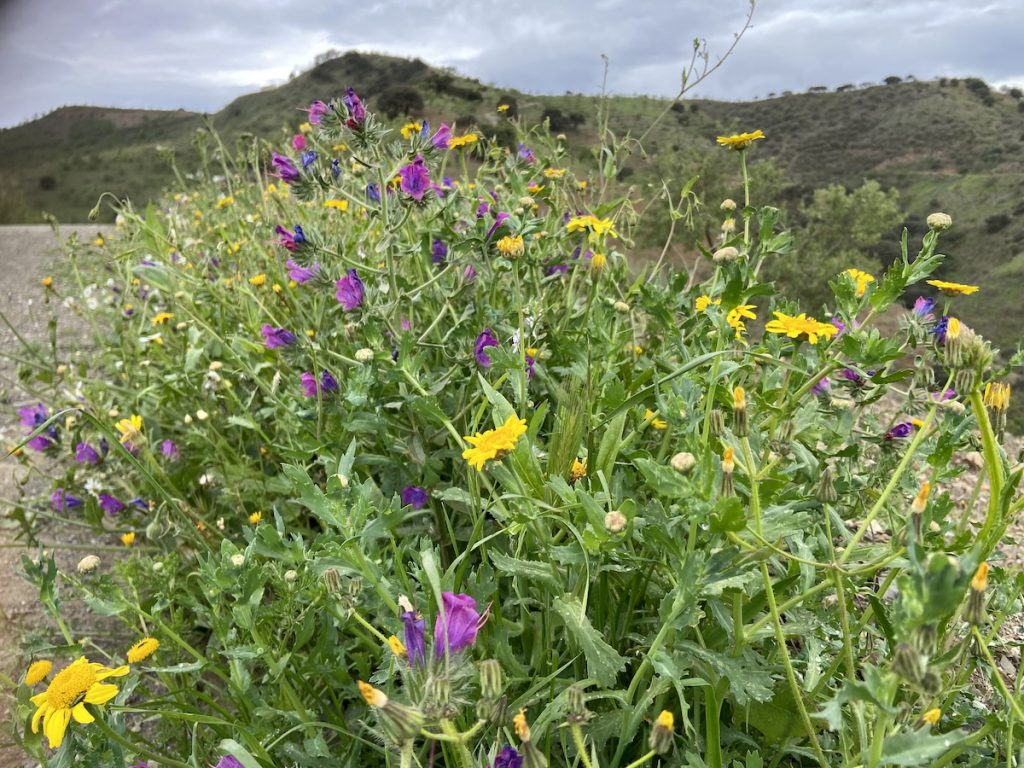
Why is spring such a lovely time for a holiday in Andalusia?
Semana Santa is actually only one of many reasons to visit Andalusia in spring. Other reasons are:
- In March and April, the countryside around Álora is often beautifully green and full of wildflowers.
- Temperatures are usually pleasant for walking and hiking.
- And the hills are much greener than many people who only know Andalusia in summer might expect.
During the day, you can go hiking, visit a white village or simply sit on the terrace with a good book. And when you feel like experiencing some culture and city life, head into Málaga to watch a Semana Santa procession.
For us, that is perhaps the perfect combination: the energy and traditions of Semana Santa in Málaga followed by the peace and quiet of the Andalusian countryside. From Finca Las Nuevas, you can also enjoy several walks in the surrounding area. On our website, you can find our e-book with walking routes for anyone planning to bring their hiking shoes on holiday.
Experience Semana Santa in Málaga from Finca Las Nuevas
If you stay at Finca Las Nuevas during Semana Santa, you can easily combine a visit to the processions with a relaxing holiday surrounded by nature. You really don’t need to spend an entire week watching processions. Choose one special day in Málaga, experience the music, incense, enormous thrones and thousands of people lining the streets, and spend the rest of your holiday discovering a completely different side of Andalusia. Perhaps that is what makes a spring holiday here so special: in the afternoon you can be walking among wildflowers and olive trees, and just a few hours later you can find yourself in the middle of centuries-old Andalusian traditions.
Semana Santa in Málaga isn’t something you should only see. It is something you should experience. And afterwards? Back to the peace and quiet of the finca.
Will we see you at Finca Las Nuevas?
0 Comments