
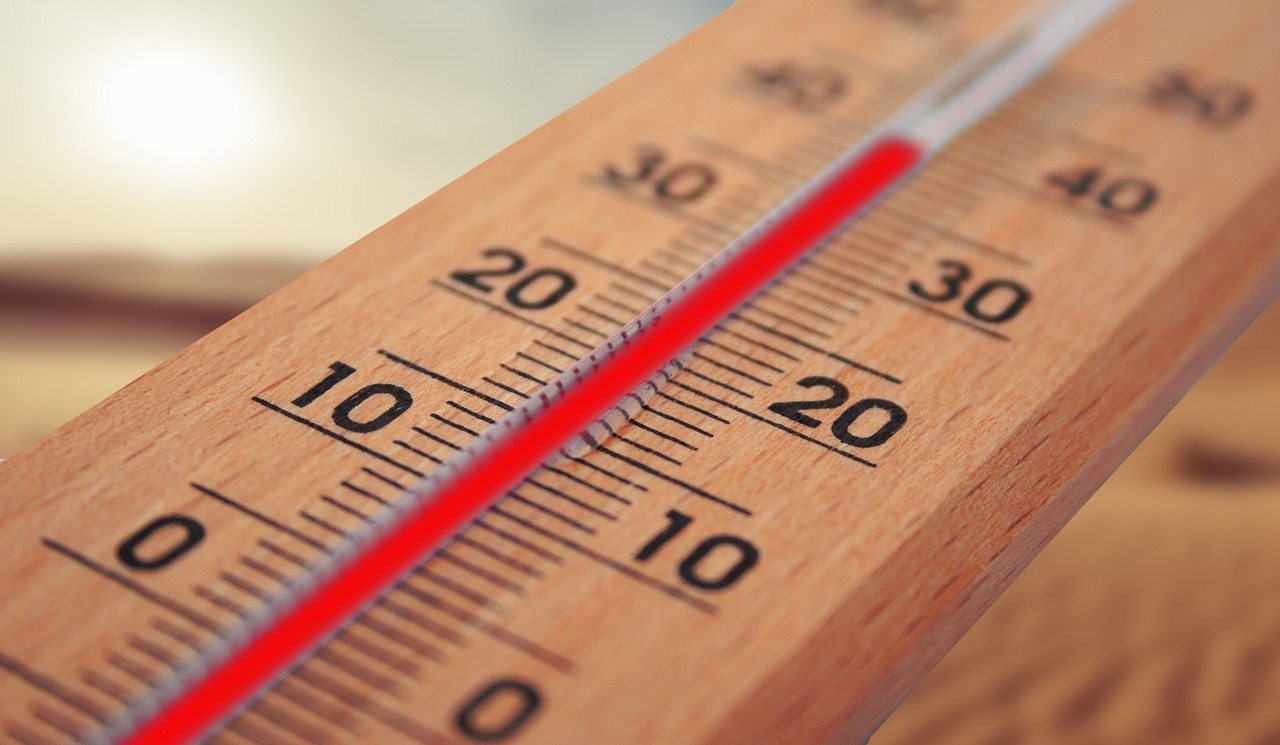
The weather in Spain: Heat and Extreme Drought? Not Everywhere! If you follow the news, you might sometimes get the impression that the weather in Spain is all about extreme heat, drought, wildfires and, occasionally, torrential rain. Temperatures above 40°C quickly make the headlines, and during a heatwave it can seem as though the whole of Spain is sweltering under a blanket of scorching heat.
But is it really that hot everywhere in Spain?
No. Spain’s climate varies enormously from region to region. While temperatures in Seville can rise above 40°C, it may be 20°C and raining along the northern coast at exactly the same time. Even within Andalusia and the province of Málaga, temperatures and weather conditions can vary considerably.
We live in the mountains near Álora, in the province of Málaga, and this is where we experience first-hand just how much altitude, wind, mountains and distance from the sea can influence the weather.

Is it hot and dry everywhere in Spain?
No. Spain has a remarkably varied climate. This is partly due to the huge differences in landscape, altitude and distance from the Atlantic Ocean and Mediterranean Sea.
In Spain, you will find, among others:
- Mediterranean climates – across much of southern Spain and along the Mediterranean coast, with hot, dry summers and relatively mild winters.
- Oceanic climates – mainly in the north, including Galicia, Asturias, Cantabria and the Basque Country. These regions receive considerably more rainfall and have milder temperatures.
- Continental climates in the interior – with greater differences between summer and winter temperatures. Mountain climates – in high-altitude areas such as the Pyrenees and Sierra Nevada, where winters are cold and snow is perfectly normal.
- Dry steppe and desert climates – particularly in parts of south-eastern Spain.
- Subtropical climates – such as on the Canary Islands.
So, the idea that the whole of Spain is always scorching hot simply isn’t true. On the same summer’s day, northern Spain can be cloudy and 20°C, while hundreds of kilometres further south temperatures climb above 40°C.
How hot is Andalusia?
There is no simple answer to this question either. The weather in Andalusia varies considerably depending on where you are. Summers in Seville and Córdoba are famous for their high temperatures. Along the Málaga coast, however, the Mediterranean Sea has a moderating effect. And in the mountains, temperatures can feel very different again, particularly in the evenings and at night. That is exactly why a news headline such as ‘Spain swelters in 45-degree heat’ tells you very little about the weather at your actual holiday destination.
A heatwave doesn’t mean the whole of Spain is above 40°C The term heatwave is sometimes misunderstood too. The Spanish weather service AEMET uses an official definition that considers not only the temperature, but also how long the heat lasts and the area affected. A heatwave must last for at least three consecutive days, with a certain proportion of weather stations recording exceptionally high temperatures. So, a few very hot summer days do not automatically mean that the whole of Spain is experiencing a heatwave.
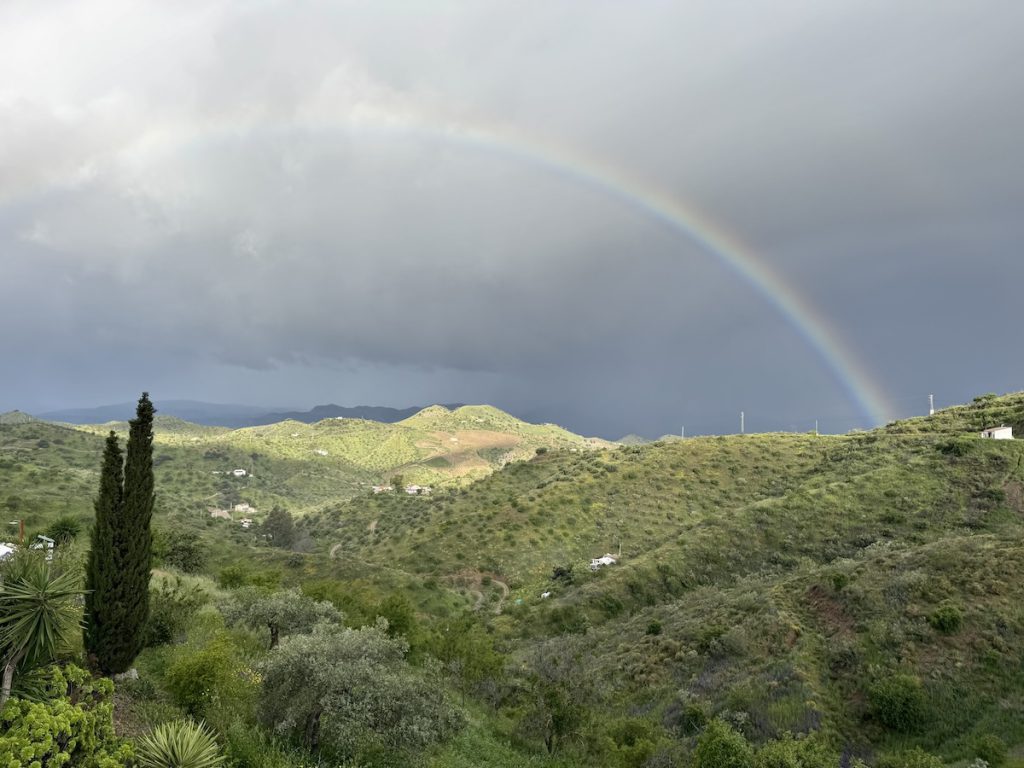
The climate in Málaga: big differences within one province
The province of Málaga is a wonderful example of the microclimates you can find throughout Spain. Finca Las Nuevas is located in the mountains near Álora, in the Guadalhorce Valley. Our more than 100-year-old olive farm has been transformed into a small-scale holiday retreat with five holiday homes. Since living here, we have discovered just how local the weather can be. Sometimes we can look out from our finca and see clouds or rain elsewhere in the valley, while the sun is still shining here. Altitude, mountains, wind direction and distance from the Mediterranean Sea all play a part.
Málaga city and the Costa del Sol
Along the coast, the climate is Mediterranean. Summers are warm and sunny, while winters are mild. The Mediterranean Sea has a moderating influence, which means temperature differences along the coast are generally less extreme than further inland.
Axarquía
To the east of Málaga lies the Axarquía, home to places such as Vélez-Málaga, Nerja and Cómpeta. This area is warm and relatively dry. Its climate even makes it possible to grow subtropical crops such as avocados and mangoes.
Sierra de las Nieves and Ronda
Head into the mountains and the climate changes again. The Sierra de las Nieves lies at a much higher altitude. As a result, temperatures are cooler and it can even snow here in winter. Summer evenings and nights can also be considerably cooler than in lower-lying areas.
The weather in Álora and the Guadalhorce Valley
And then there is our own area: Álora and the Guadalhorce Valley. Summers here are definitely hot and dry. There’s no point pretending otherwise. But even between the village of Álora, the valley and our finca in the mountains, we notice differences in temperature.
Our location among the hills also means we regularly enjoy a refreshing breeze. Especially later in the day, it can be wonderful. And there is something else that a temperature chart cannot tell you: what the weather actually feels like.
At our finca, we are not surrounded by asphalt, tall buildings or busy city traffic. Instead, we are surrounded by olive and almond trees, right in the middle of nature. As a result, a hot summer’s day here can feel very different from the same temperature in the middle of a city.
Antequera
Around Antequera, the climate becomes somewhat more continental. The differences between day and night, as well as between summer and winter, are greater. Summer days can be very hot, while nights during other seasons can be surprisingly chilly.
El Chorro and the Caminito del Rey
The area around El Chorro and the Caminito del Rey is also hot and dry during summer. However, the surrounding mountains and gorges can create very localised wind and weather conditions. That’s why, during summer, we advise our guests to plan activities such as the Caminito del Rey and longer hikes early in the day.
How warm is it at night in Andalusia?
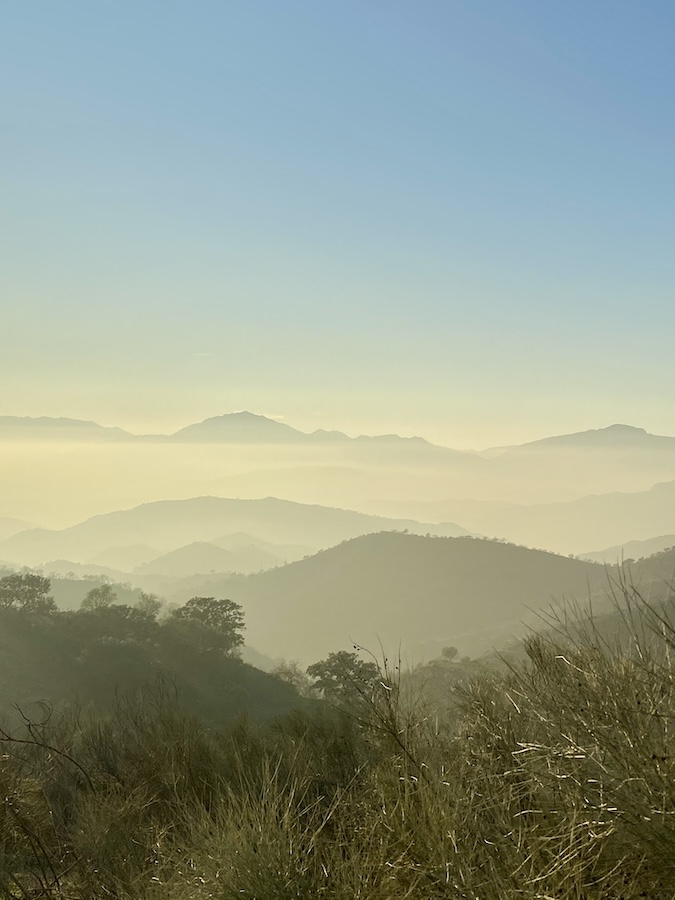
For a holiday, this might actually be more important than the maximum temperature in the middle of the day. Here in the mountains, temperatures usually start to drop in the evening. As soon as the sun disappears behind the mountains, you can often feel the difference quite quickly. That means we can enjoy sitting outside in the evening and let the house cool down naturally at night.
Of course, we have warm nights too. During a real heatwave, the heat can linger, and there are nights when temperatures remain high. But that isn’t the case throughout the entire summer. And we think that distinction is important. A weather app showing 35°C during the day only tells you part of the story.
Is Andalusia too hot for a summer holiday?
Not necessarily. It mainly depends on where you stay and what you want to do during the day. We certainly wouldn’t recommend setting off on a long, unshaded hike at 2 pm in the middle of summer. We wouldn’t do that ourselves either.
Life naturally takes on a different rhythm here in summer. Get up early for a walk or day trip. Then have lunch, go for a swim, read a book or enjoy a siesta. And once the hottest part of the day has passed, everything comes back to life. Long dinners outside in the evening, another dip in the pool and simply enjoying the peace and quiet. For us, that is summer in Andalusia too.
Wildfires in Spain: how big is the risk?
Unfortunately, wildfires are a reality during the dry summers in Spain and other Mediterranean countries. But here too, news coverage can sometimes give a one-sided impression. Not every wildfire develops into a major forest fire. Andalusia has an extensive system for the prevention, detection and suppression of wildfires: Plan INFOCA. In 2026, the system includes fixed and mobile observation units, fire engines, specialist teams, aeroplanes and helicopters. We have experienced first-hand just how quickly this system can spring into action. A
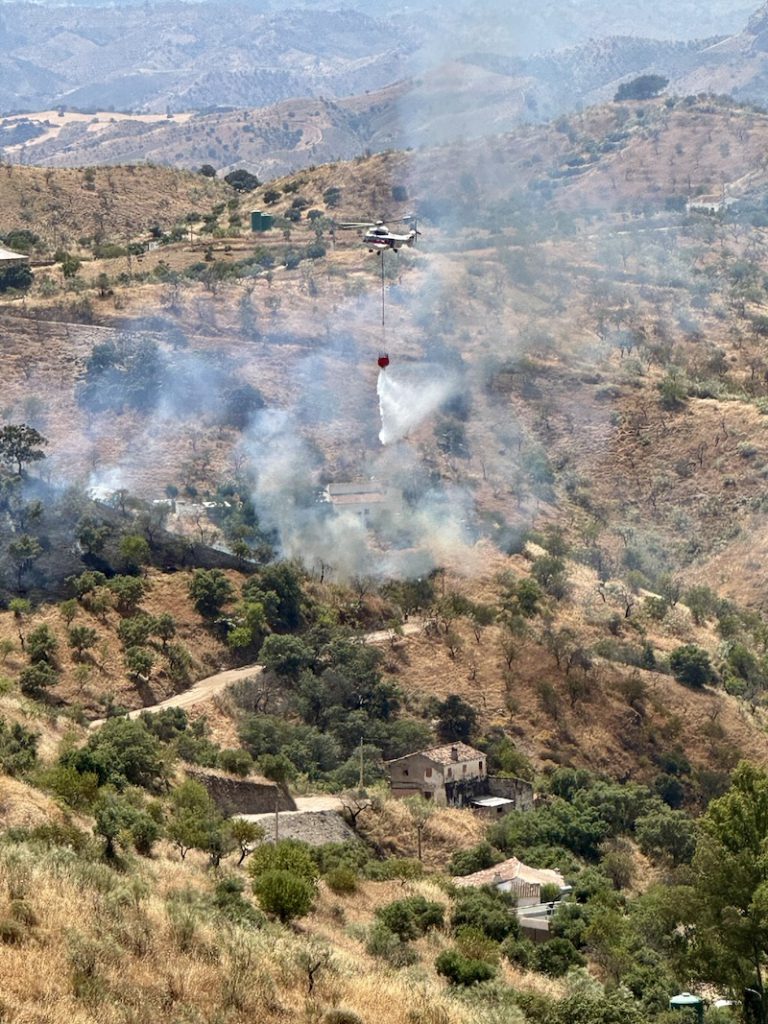
Wildfire opposite our finca
A while ago, a fire broke out on the mountain opposite Finca Las Nuevas. After a wet winter, the countryside had been beautifully green during spring. Plants and wildflowers were growing everywhere. But during summer, all that vegetation dries out.
On that particular day, there was also a strong wind. A dangerous combination. We saw the smoke and, of course, it was frightening. But what impressed us most was how quickly everyone responded. The area was soon being surveyed from the air. Fire engines and firefighters arrived, while a helicopter flew back and forth dropping water onto the fire.
Within about two hours, the fire was under control. A few hours later, it had been extinguished. When a small fire flared up again that evening, it could be dealt with immediately because an observation team had remained on site.
None of this takes away from the fact that wildfires can be dangerous. A wildfire can become very serious, and instructions from the authorities should always be followed. But our experience also shows the other side of the story: during wildfire season, there is extensive monitoring and action can be taken very quickly.
Is Spain still a good holiday destination despite the heat and wildfires?
Yes, but choose your region and the time of year carefully. Spain is so large and geographically diverse that you simply cannot talk about Spanish weather as though it were the same everywhere.
Do you want to spend your summer holiday going on long hikes? In that case, certain areas or other times of year may be more suitable. Would you rather swim, relax and spend long evenings outdoors? Then summer in Andalusia can be wonderful.
And if you want to hike, explore cities and discover the countryside, we think spring, autumn and winter are fantastic times to visit.
What is the weather like at Finca Las Nuevas?
Finca Las Nuevas is located in the mountains near Álora, in the province of Málaga, at an altitude of approximately 550 metres. Summers here are warm, sunny and dry. The days are perfect for swimming and relaxing, while we prefer to plan walks and active excursions in the morning.
Spring and autumn are ideal if you want to combine sunshine with hiking, cycling and day trips. And winter? That often comes as a surprise to our guests. There are plenty of sunny days when you can sit comfortably outside. In the evenings and at night, however, temperatures can drop considerably. That’s part of staying in the mountains. It is precisely these seasonal differences that make living here throughout the year so special for us.
Our advice: look beyond the temperature on your weather app. Does your weather app show 34°C, 36°C or perhaps even 40°C for your holiday in Andalusia? Don’t focus on that one number alone.
Also check:
- where exactly that temperature is being measured
- the temperature in the morning and evening
- humidity
- wind
- the altitude of your holiday destination
- and how long the hot weather is expected to last.
Most importantly, check the local weather forecast for your actual holiday destination, rather than a general weather forecast for Spain.
Frequently asked questions about the weather in Spain
Is it extremely hot everywhere in Spain during summer?
No. Temperatures vary considerably from region to region. Inland areas and parts of southern Spain can become extremely hot, while the northern coast and mountain regions can be significantly cooler.
Is Andalusia always hotter than 40°C in summer?
No. Temperatures above 40°C do occur, particularly during very hot periods and in inland areas, but this does not mean that the whole of Andalusia is above 40°C throughout the summer.
Is Málaga cooler than Seville?
Generally speaking, the Mediterranean Sea has a moderating influence on Málaga and the Costa del Sol. Seville is located inland and can experience considerably higher maximum temperatures during summer.
Is it cool at night in the mountains of Málaga?
The hills and mountains often cool down more at night than densely built-up urban areas and locations directly on the coast. During a heatwave, however, nights can remain warm here too.
What is the best time of year to visit Andalusia?
That depends on what you want to do. Spring, autumn and winter are particularly attractive for hiking and active holidays. For swimming, relaxing and enjoying long summer evenings, summer can be wonderful.
Are wildfires a reason not to visit Andalusia?
Wildfires are a genuine risk during dry periods, but that does not mean the whole of Andalusia is unsafe. The region has an extensive system for detecting and fighting wildfires. During your holiday, always follow local warnings and instructions from the authorities.
Experience the weather in Andalusia for yourself
So don’t immediately be put off when you see a headline saying that ‘Spain is sweltering in extreme heat’. Take a closer look at where those temperatures are actually being measured. The weather in Seville is not the weather in Málaga. The weather on the coast is not the same as in the mountains. And we even notice differences between Álora and our finca.
At Finca Las Nuevas, you can enjoy the Andalusian outdoor lifestyle surrounded by olive and almond trees. In summer, that means swimming, taking things easy during the hottest hours of the day and enjoying long evenings outside.
During the cooler months, we put on our walking shoes and head out to explore. And if you’re unsure about the weather before your stay? Just ask us. We live here ourselves, and we’d much rather tell you what the weather is really like up here on our little mountain near Álora than rely on a general weather map for the whole of Spain.
Relax, Refresh, Enjoy!

0 Comments